A consistent sketchbook practice begins with accessible subjects. Today, I chose to sketch my daily clothing, translating a functional choice into a practical habit. Recording these weekly outfits serves as an honest visual log, linking the act of drawing to the quiet evidence of everyday life.
The execution adapts to the time and focus available. A messy, five-minute sketch works perfectly as a raw and honest record of the day.
To practice tactile observation, the drawing can become a study of surfaces, using varied strokes to map the contrast between heavy denim and soft wool.
Understanding fabric structure and drape
To truly capture the essence of an outfit, it helps to observe the physical structure of the garments. Think about how the fabric is woven and constructed. A heavy twill weave, like classic denim, holds its own shape and creates sharp, angular folds that are incredibly satisfying to sketch. On the other hand, a soft lyocell or a lightweight plain weave cotton drapes fluidly, following the natural curves of the body underneath.
When drawing, try to notice the seams and the underlying pattern shapes. The way a garment is cut, or how a textured linen shirt falls across the shoulders, tells a story of its own. You do not need to draft a perfect technical drawing, but paying attention to these textile behaviors adds a profound layer of depth to a simple everyday sketch.
A third path is pure reduction: using a single black pen or graphite to trace minimalist outlines and capture solid silhouettes. The method is flexible, shifting naturally to fit your daily rhythm.
Adding text to the margins creates a deeper record. Noting the date, the fabric weight, or the weather conditions expands the context of the drawing.
Selecting your tools and canvas
The tools you choose also shape this daily experience. For a continuous visual log, the sketchbook needs to be reliable and inviting. A handmade sketchbook crafted with a sewn signature method or an open-staple binding is highly recommended because it allows the pages to lay completely flat on the desk. This simple structural detail removes the physical friction of fighting the book while you draw. Pair this with a smooth, medium-weight paper that can seamlessly handle both a quick ink pen and softer graphite shading.
As days pass, this continuous practice builds a personal visual inventory. Looking back at the pages reveals recurring structural patterns, preferred palettes, and functional silhouettes. The examples below are just a starting point; the execution remains entirely open.
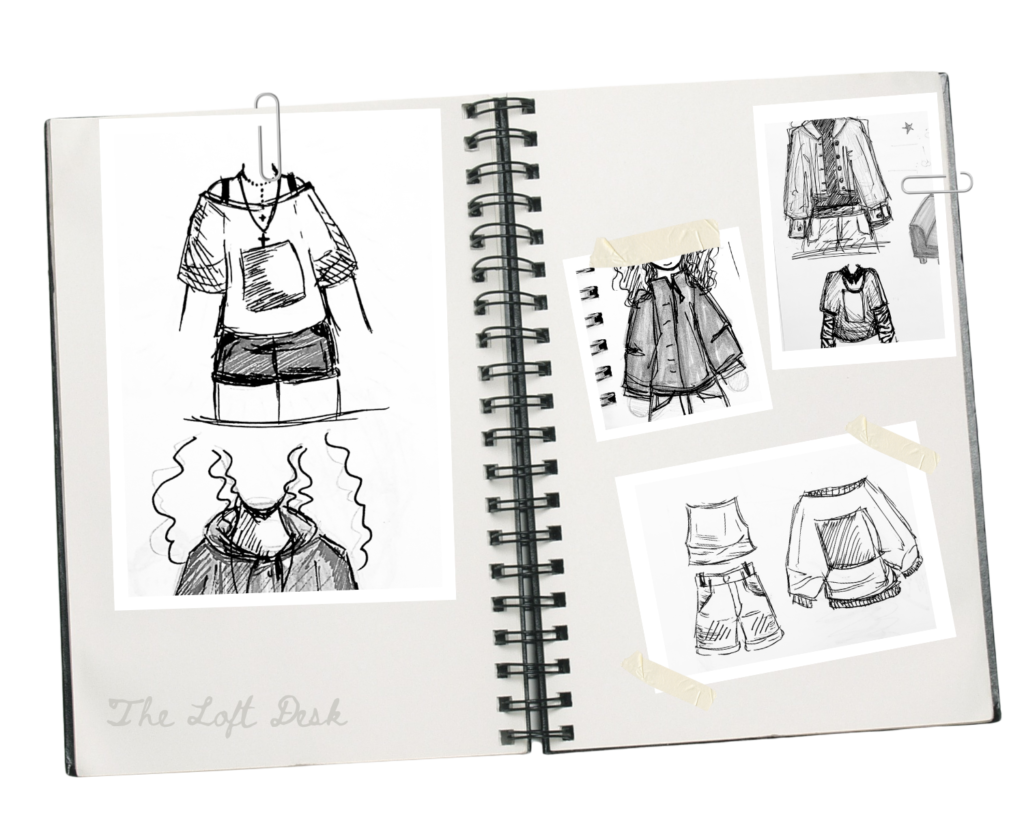
To be honest, none of these drawings were intentional. I often sketched them casually while sitting in class or during idle moments. Allowing the practice to happen spontaneously in the background of another activity is also a perfectly valid way to start.
As a starting point, try sketching your outfit at the end of the day for a week. Tying the sketch to the closing of your routine helps to build a solid habit.

L. M. is a researcher and an independent creator. More than just producing visual work, L. M. is driven by the desire to cultivate self-reliance, exploring how simple, imperfect physical actions can offer a renewed sense of independence.