Sometimes the hardest part of making something is simply deciding what to make. This morning, after being reminded of a puppet show and acoustic kids’ music from my childhood, I found an easy and cool way out of that creative block.
To capture a bit of that handmade energy from the shows, I decided to sketch some of those old characters today. It made me realize that nostalgia can be a highly practical tool.
Every childhood is a highly individual experience, yet there is a shared language and a sense of mutual recognition within every generation. While tracing back my own memories today, my mind wandered to a very specific digital artifact: kidpix.app.
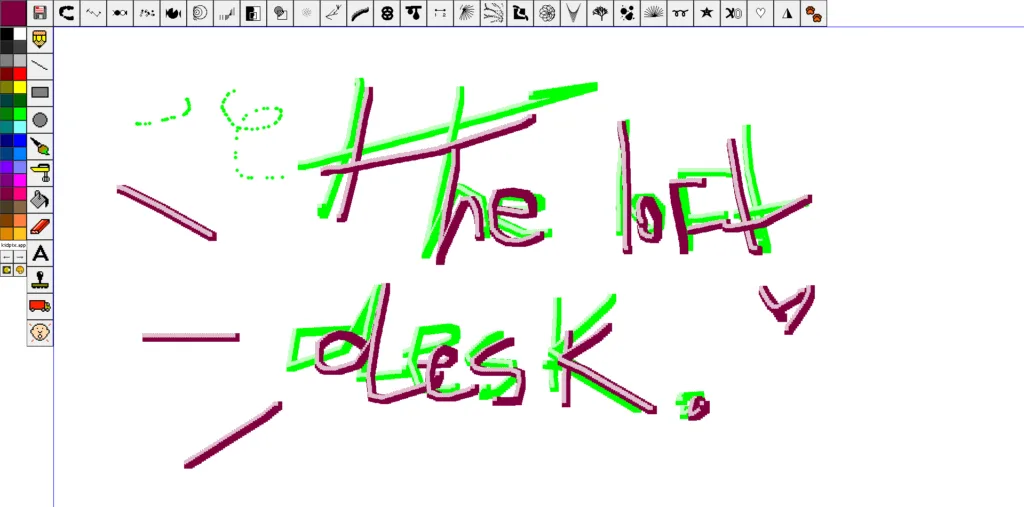
If you are not familiar with it, it’s a web revival of a classic 90s drawing software. It is wonderfully chaotic, full of pixelated stamps, loud colors, and absolutely zero rules. Playing around with it immediately unlocked another memory: the endless hours I spent as a kid making art in the old Windows Paint. Back then, there was no pressure to make something ‘good’ or aesthetic, it was just the pure joy of filling a blank canvas with clumsy pixels.
What I also realized is that maybe what made those early digital tools so great was their limitation. You didn’t have infinite layers, undo buttons, or perfect brushes. Sometimes, having fewer options is exactly what we need when we feel paralyzed by modern, complex software.
It doesn’t matter if you are holding a real pen or clicking a mouse, the goal today it’s just to experiment, stop taking the blank canvas so seriously and start messing around again.
As a small invitation: Take five minutes right now. Open kidpix.app or grab a scrap of paper. Draw a house, a tree, or a character you loved so much as a kid.
No erasing allowed, just try to enjoy the process of making a mess. I can’t promise it will fix everything, but I really believe that once you get lost in a good memory, the rest of your ideas just start to untangle by themselves.

L. M. is a researcher and an independent creator. More than just producing visual work, L. M. is driven by the desire to cultivate self-reliance, exploring how simple, imperfect physical actions can offer a renewed sense of independence.