After some research and attempts, I realized that having your own surface catalog is one of the most useful tools you can build for your creative process.
Instead of relying exclusively on the same generic internet texture banks every time you need a background or a layer for a creation, you now have a physical and individual archive. basically a collection of patterns captured by you, ready to be scanned, mixed, and incorporated into your own projects.
The coolest way I found to catalog these textures is through frottage (from the french “frotter”, which means “to rub”).
The method was formalized in 1925 by the surrealist artist Max Ernst.
Max Ernst (1891–1976) was a german painter and sculptor, known as a fundamental pioneer of dadaism and a founder of the surrealist movement in paris. It’s said that he developed the technique upon observing the raised grain of an old wooden floor; by placing a paper over the planks and passing a soft pencil over it, Ernst realized that the friction extracted a complex topography that he would never be able to draw by hand in such an organic way.

He used this process of collecting raw textures (like wood, dried leaves, and fabrics) to create the famous series of works histoire naturelle, published in 1926 as an impressive portfolio of 34 collotype plates (you can check moma.org or britannica for the historical records).
In practice, almost a hundred years later, the process remains the same. You just need to place your sheet over any surface with relief and apply friction with graphite, chalk, or charcoal.
recommended materials for your catalog
for your surface catalog to have the best fidelity before moving to the screen, choosing the right physical tools is essential:
wax and pastels: ideal for rough, large-scale surfaces, like brick walls or concrete floors.
low weight paper: thin sheets (between 70g and 90g), like sketch or tracing paper, are perfect for capturing micro-reliefs without tearing from the friction.
graphite and charcoal: opt for very soft pencils (4b to 8b) or pure charcoal sticks. the hardness of the graphite drastically changes the capture and contrast of the organic details.
Below, I included one of ernst’s original works for reference, followed by some scanned samples i recently created using the same technique:
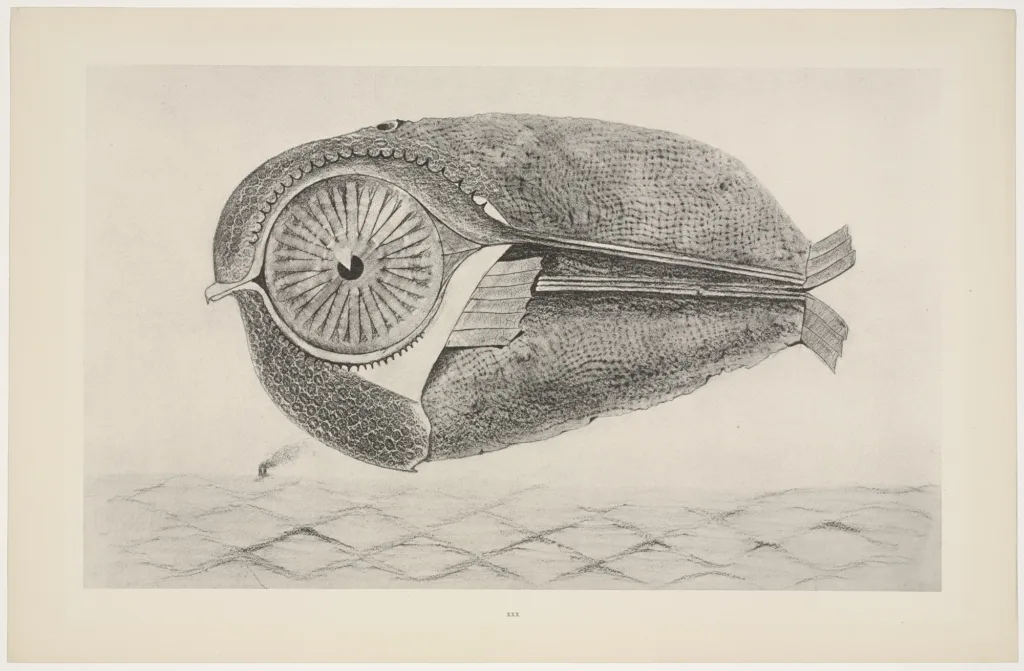
Max Ernst – The Fugitive (L’Évadé) from Natural History (Histoire Naturelle) c. 1925, published 1926
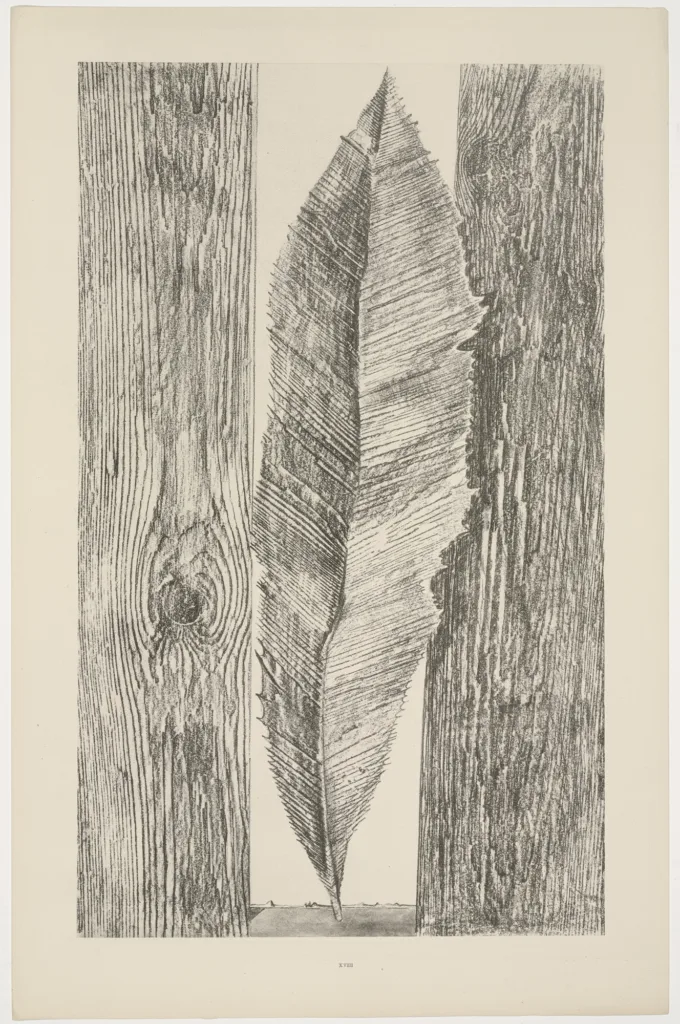
Max Ernst – The Habit of Leaves (Les Moeurs des feuilles) from Natural History (Histoire naturelle) c. 1925, published 1926
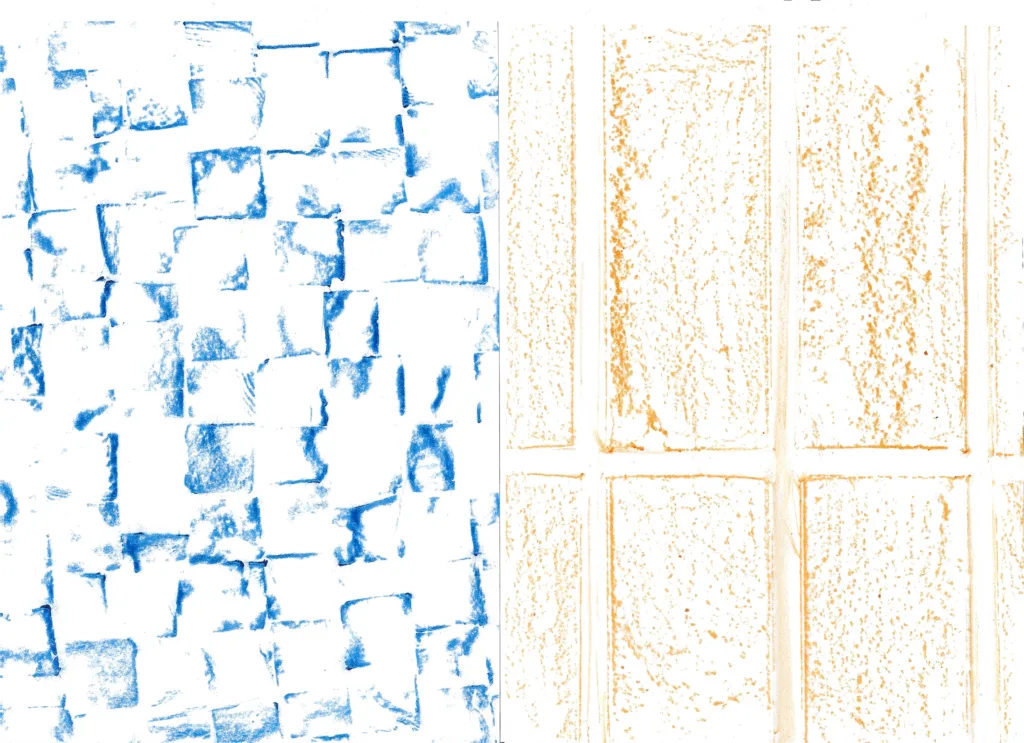
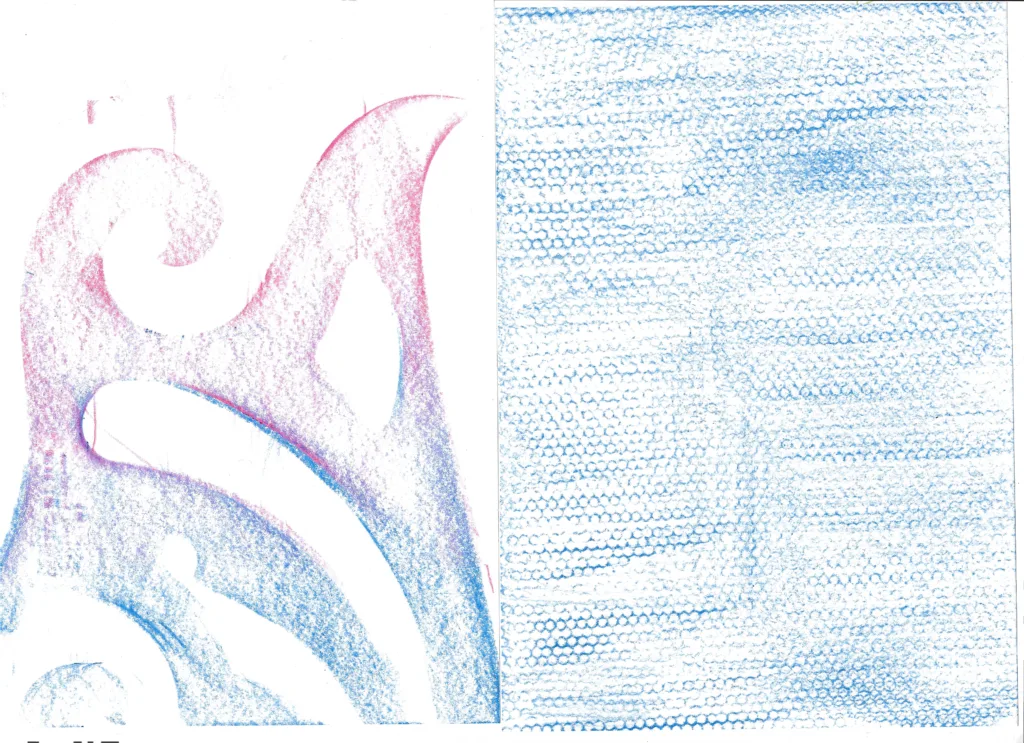
digitizing and applying to moodboards and collages
After the collection, the true power of the archive may comes to life in the digital environment too.
You can scan your printed sheets at a minimum of 300 dpi. Import the files into editing software and use the levels tool to whiten the background of the paper, isolating the contrast of the extracted texture.
When integrating these ‘analog textures’ into your moodboards or mixed media digital art, change the layer’s blend mode to multiply. This instantly removes the white background, organically overlapping your frottage over any illustration or photograph.
If the idea of “collecting” textures around the house isn’t really your thing, that’s fine. There are excellent digital repositories, like Texture Fabrik, that offer incredible materials. however, the great value of keeping your own archive is autonomy and exclusivity.
no downloaded texture will have exactly the same mark as the one you extracted from a specific wall. it’s a simple practice, but it ensures that the elements of your future compositions are genuinely yours.
L. M. is a researcher and an independent creator. More than just producing visual work, L. M. is driven by the desire to cultivate self-reliance, exploring how simple, imperfect physical actions can offer a renewed sense of independence.